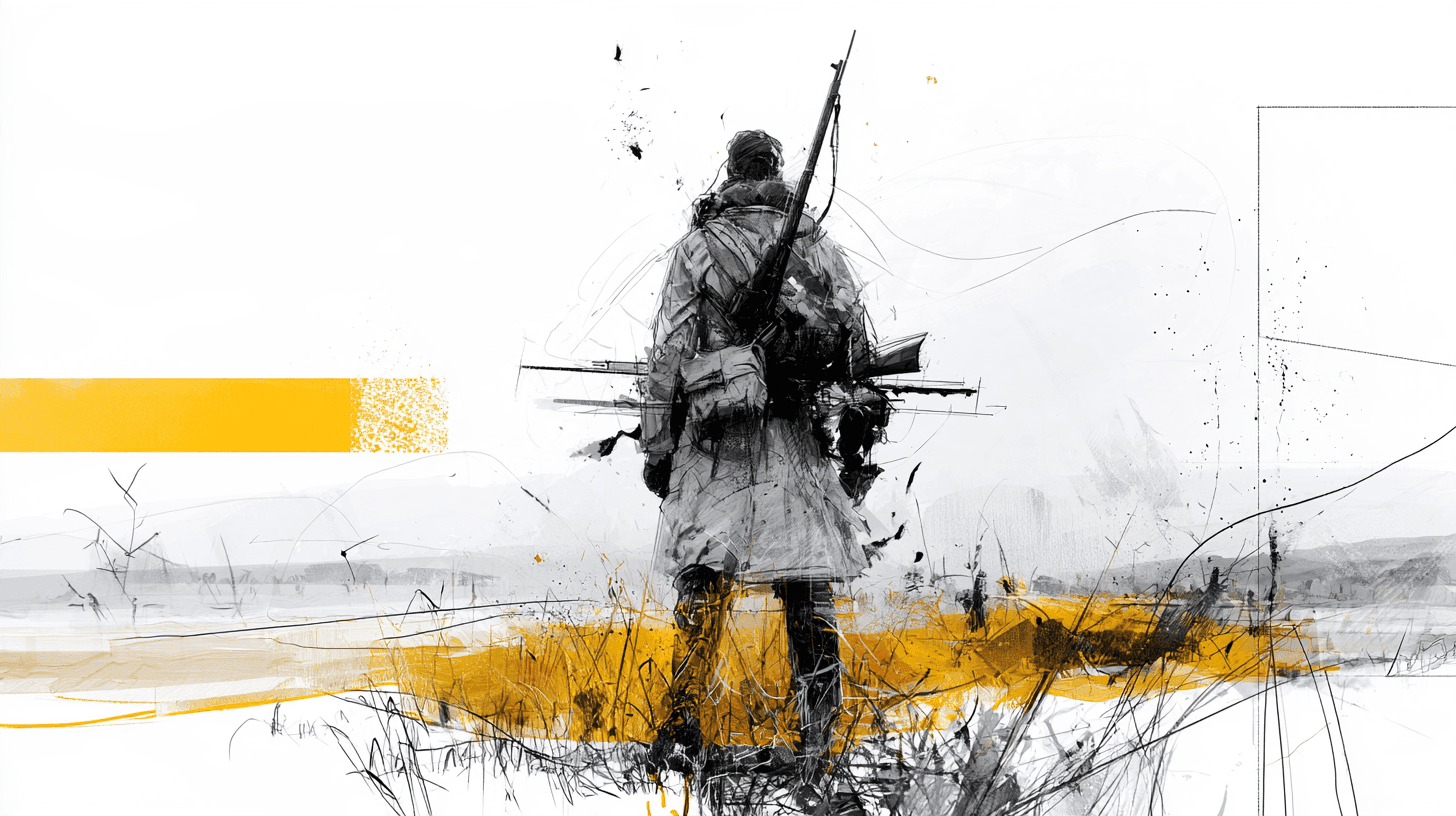
In the gardens of Gatchina Palace, a sentry stood guard over a corner of lawn where there was nothing at all. The soldier didn't know why. Neither did his officers. Eventually someone went digging through the archives and found the origin: decades earlier, the Tsarina had seen a flower bloom there and ordered it protected. The flower had died long ago. The order was still alive (it's an anecdote that has been going around for more than a century and that, as far as I know, nobody has ever really documented, so take it for what it is).
I don't know a better definition of status quo. A decision made by someone else, a long time ago, for reasons nobody remembers, that keeps generating work because nobody has the role (or the nerve) to ask whether the flower is still there. The people doing this work aren't lazy and they aren't stupid. They execute. Often with care. Almost never with joy.
Generative AI is told as a story of replacement: the machine does what the person used to do. I see it differently. Before it replaces anything, AI makes things visible, because to automate a process you have to describe it step by step (I know, it sounds obvious). And while you describe it, you discover that one step exists only to check the one before, that an output ends up in a folder nobody ever opens, that a procedure exists because the old one did. AI is the official who opens the archive and finds out the flower is gone.
Finding out that a job is useless doesn't make it disappear, though. It only makes it embarrassing. At that point, what matters is how the organization is designed. How its ability to react to change is designed, to yet another black swan. On this subject, it's well known that in the 1980s the Soviet Union built a system called Perimetr, which went down in history as Dead Hand. The problem it had to solve was this: if a nuclear attack wipes out the entire chain of command, who orders the response?
The solution flipped the logic. On alert, the system didn't wait for an order to react; it waited for an order to stop. If nobody blocked it, the response was launched. If the hand that was supposed to stop it was dead, the response came anyway. Ethically, a system designed for nuclear retaliation and a corporate governance rule are worlds apart, and I'm not putting them on the same level. I'm only interested in the logic of the default. Who has to act to make things happen, and who has to act to stop them?
At FAIRFLAI we work in Holacracy, and the constitution we've adopted answers that question the same way Perimetr does. A proposed change doesn't need everyone's consent. It passes if nobody raises a valid objection, meaning nobody shows that it causes harm or moves the organization backwards. The criterion is progress over perfection: the proposal doesn't have to be perfect, it has to be safe enough to try. Whoever wants to stop it raises their hand and explains why. Silence authorizes. In hierarchical organizations the opposite is true. Yesterday's decision binds the present until someone revokes it, and whoever wants change has to collect signatures, get through committees, and convince whoever gave the order decades ago and may well be retired by now. The sentry stays there because nobody ever signed the order to remove him. The resilience we need today is the ability to react without waiting for the chain of command to find the time to decide.
When someone tells the sentry that the flower is gone, the sentry may push back. That's predictable, and it shouldn't be dismissed as stubbornness. First of all, you need to ask how he's doing. At FAIRFLAI there's a question we always keep in mind: what does a person think when they ask themselves "what will be left of my job once it's automated?" If their answer is "nothing", every adoption project becomes a threat to defend against, empty lawn included.
That's why people need to fully understand what augmentation means, and above all they need the power to change the process they work in. If they can change it, they decide which steps to cut and what to do with the time that frees up. If they can't, they'll lose their jobs. They say that the best prisons are the ones without walls and without bars. The soldier lived inside one, without the authority to choose something more useful to guard. When the order to leave the lawn finally comes, all he'll know how to do is walk away. In your companies, where you're adopting AI, can the people closest to the problem change processes on their own? If the answer is no, maybe it's time to give us a call.